

sa-paper manuscripts : ค้นหาหนังสือธรรมะ หน้า 1 / 9
หน้าหนังสือทั้งหมด
92
The Role of Sa-Paper in Buddhist Manuscripts
…ws codes, technological know-how, folklore, narrative poems, and Zanha Libretto. Strictly speaking, sa-paper manuscripts are not Buddhist scriptures, but they use the sacred script, and Dai people regard these manuscript…
Sa-paper, made by local artisans, serves as a practical alternative for copying both Buddhist and secular texts in Sipsong Panna. Although less symbolic than palm leaves, sa-paper's ease of use and du
89
Preservation of Dai Buddhist Manuscripts in Sipsong Panna
… Research Center, there are about 1,000 copies of palm-leaf scriptures in the Yunnan, and countless sa-paper manuscripts.6 This author has done extensive fieldwork in Dai temples in places such as Menghai and interviewed…
This project aligns with the national focus on protecting religious culture in minority areas, specifically the Dai community in Yunnan. Research has identified more than 400 Dai Buddhist manuscripts,
95
Dai Buddhist Manuscripts in Yunnan's Dehong Prefecture
…ripts is also different.13
The Buddhist manuscripts of the Sipsong Panna region are mainly copied (sa-paper manuscripts) or inscribed (palm-leaf manuscripts) by Buddhist monks after they resume secular life. The process…
This text discusses the unique tradition of Buddhist manuscripts among the Dai people in Dehong Autonomous Prefecture of Yunnan, where various types of manuscripts are produced. Most texts utilize sa-
93
Forms of Sa-Paper Manuscripts in Sipsong Panna
There are three forms of sa-paper manuscripts in the Sipsong Panna region. The first is the most common "ordinary wide-breadth manuscript", with …
In the Sipsong Panna region, there are three main forms of sa-paper manuscripts. The first, the ordinary wide-breadth manuscript, measures about 18cm x 25cm and has 14 to 20 lines…
91
Exploration of Theravāda Buddhist Manuscripts in Sipsong Panna
…ures which were compiled, translated and published on the basis of recently collected palm-leaf and sa-paper manuscripts, volume 98 of the Hinayana Agama contains only three books: the Sutra Collection (经典), the Theragat…
…s Theravāda Buddhist manuscripts from Sipsong Panna, primarily distinguishing between Palm-Leaf and sa-paper manuscripts. Historically, key Buddhist texts were often documented on palm leaves, which are still significant…
96
The Imminent Extinction of Palm-Leaf Manuscripts in Sipsong Panna
III The Problem of the Imminent Extinction of Palm-Leaf Manuscripts in Sipsong Panna
Buddhism in Sipsong Panna is characterised by its manuscript culture. However, today the number of the palm-leaf m
This text discusses the worrying decline of palm-leaf manuscripts in Sipsong Panna, where Buddhist manuscript culture is rich but facing imminent extinction. Key reasons include the autonomous nature
98
Preserving Palm-Leaf Manuscripts in Southwestern China
Conclusion
Numerous palm-leaf and sa-paper manuscripts exist in the Dai regions in Southwestern China. These Buddhist manuscripts, copied and inscribed in…
In Southwestern China, palm-leaf and sa-paper manuscripts are crucial for studying ancient Buddhism, showcasing the influence of Theravāda Buddhism. The rece…
97
Preservation of Palm-Leaf Scriptures in Dai Buddhism
donate palm-leaf scriptures as an act of merit and such donations
appear less frequently in the sacred dantam (贽坦) or offering
ceremony. Donors prefer to donate Buddhist scriptures printed
using mod
This text discusses the decline in donations of traditional palm-leaf scriptures in favor of more accessible and readable texts printed on Chinese and sa-paper. Reasons include cost, legibility, and t
94
Buddhist Manuscript Formats in Dai Region
…f Weixiandala (维先达膩) collected by my Research Center, is a 5-line-format manuscript. The formats of sa-paper manuscripts are varied. Manuscript pages may have 14,15,16,17,19,20,21 lines depending on the size of the paper…
Volume 98 Khuddaka-nikāya and Volume 99 Majjhima-nikāya are primarily in 5-6 line formats, while Volume 100 Digha-nikāya is formatted with 4-5 lines per page. The jäṭaka Wexiandala represents a key Bu
88
Overview of Theravāda Buddhist Manuscripts in China
I will give a brief overview of the manuscripts that have been
discovered and catalogued, an explanation of some current research
projects, and I will discuss some of the problems that threaten
China'
This document provides an overview of Theravāda Buddhist manuscripts found in China, particularly in Yunnan Province. It discusses the significance of these manuscripts within the Dai community and hi
18
Understanding Dhammakāya and Theravāda Manuscripts
and is ‘spiritually reborn’. The dhammakāya becomes her new identity as the milk nourishes her spiritually. It is something she is given as a verbal teaching.
To add the material from the Apadānas is
This text delves into the doctrine of dhammakāya, representing a new spiritual identity that arises from teachings, akin to nourishment from milk. It connects the concepts found in the Agañña-sutta, i
21
Exploring Buddhist Manuscripts and Teachings
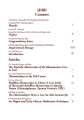
JDIRI
Contents
The Most Venerable Phrathepyanmahami (Luang Phaw Dhammajayo)
*Homily* I
Garry W. Trompf
Emeritus Professor in the History of Ideas
This text presents a collection of scholarly articles on Buddhist manuscripts and teachings, focusing on contributions from various experts. It includes studies on the Tipitaka Manuscripts of the Kham
565
Buddhist Manuscripts and Translations
Harrison, Paul M., trans. 1998. *The Pratyutpanna samādhi sūtra,* BDK English Tripiṭaka. Berkeley, CA: Numata Center for Buddhist Translation and Research.
Harrison, Paul. 2006. "Vajracchedikā Prajñāp
This collection features key translations and studies of Buddhist manuscripts, highlighting the work of scholars like Paul M. Harrison and Jens-Uwe Hartmann. Notable texts include the Pratyutpanna sam
3
Garudhamma 8: Exploring Gender Issues in Buddhism
Garudhamma 8
What did the Lord Buddha Establish?
Wilaiporn SUCHARITTHAMMAKUL
Abstract
This paper deals with the Buddhist outlook on gender issues. Contemporary feminists have extrapolated moder
This paper examines the Buddhist perspective on gender issues, particularly the eight garudhamma, which have been contested in modern debates around gender equality. It investigates whether these teac
27
Exploring the Manuscripts of Nong Pa Fa Cave
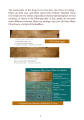
The manuscripts of the Nong Pa Fa Cave have two forms of writing: Dham Lao from Laos, and Dham Lanna from northern Thailand. These two scripts are very similar, especially on manuscripts dating back s
The manuscripts of the Nong Pa Fa Cave showcase two primary forms of writing: Dham Lao from Laos and Dham Lanna from northern Thailand. While these scripts exhibit notable similarities, especially in
29
Exploring the Origins of the Nong Pa Fa Cave Manuscripts
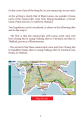
On the cover of one of the Nong Pa Fa Cave manuscript, we can read:
As the writing is clearly that of Dham Lanna, one wonders if some parts of the manuscripts come from Muang Nandaburi, a former name
This text examines the Nong Pa Fa Cave manuscripts, highlighting their writing style as Dham Lanna. It raises questions about their origins, specifically whether part of these manuscripts originate fr
563
Exploring Early Buddhist Texts and Manuscripts
Kandy: Buddhist publication Society.
Dietz, Siglinde. 2007. "Buddhism in Gandhāra." In A. Heirman and S. P. Bumbacher, eds., *The spread of Buddhism*, pp. 49-74. Leiden ; Boston: Brill.
Dutt, Nali
This text includes references to significant works in Buddhist studies, highlighting publications and manuscripts that explore the spread of Buddhism, such as Dias's study on Gandhāra and Dutt's Gilgi
83
Paleographical Analysis and Buddhist Manuscripts
Sander, Lore. 2000. “Appendix: A brief paleographical analysis of the Braāhmī manuscripts in volume I.” In J. Braarvig, eds., Buddhist manuscripts vol 1, pp. 285-300. Oslo: Hermes Pub. Original editio
This section presents a brief paleographical analysis of the Brahmi manuscripts in Buddhist texts as compiled by various scholars. Notable contributions include analyses by Sander (2000) on manuscript
86
การวิเคราะห์พาลีกราฟและคัมภีร์มนต์ในพระพุทธศาสนา
Gilgit-Bamiyan Type I
Sander, Lore. 2000. “Appendix: A brief paleographical analysis of the Braḥmī manuscripts
in volume I.” In J. Braarvig, eds., Buddhist manuscripts vol 1. pp. 285 - 300. Oslo:
บทนี้นำเสนอการวิเคราะห์พาลีกราฟในคัมภีร์ Braḥmī และการศึกษาภาษาไทยของบทพระธรรมที่สำคัญ รวมถึงคำแปลของคำสอนจากพระพุทธเจ้าและปรัชญาเกี่ยวกับธรรมะจากแหล่งที่มาแตกต่างกัน แสดงให้เห็นถึงคุณค่าทางวัฒนธรรมแล
3
Garudhamma 8 and Gender Equality in Early Buddhism
Abstract:
Garudhamma 8, What did the Lord Buddha Establish?
by Wilaiporn SUCHARITTHAMMAKUL
This paper deals with the Buddhist outlook on gender issues.
Contemporary feminists have extrapolated moder
This paper investigates the debate surrounding the eight garudhamma and their perceived authenticity in Buddha's teachings, analyzing gender equality in early Buddhism. It reviews claims challenging t